Why balancing “business as usual” and “improvement” measures is essential for effective strategy execution
In every organization, there are two kinds of performance at play:
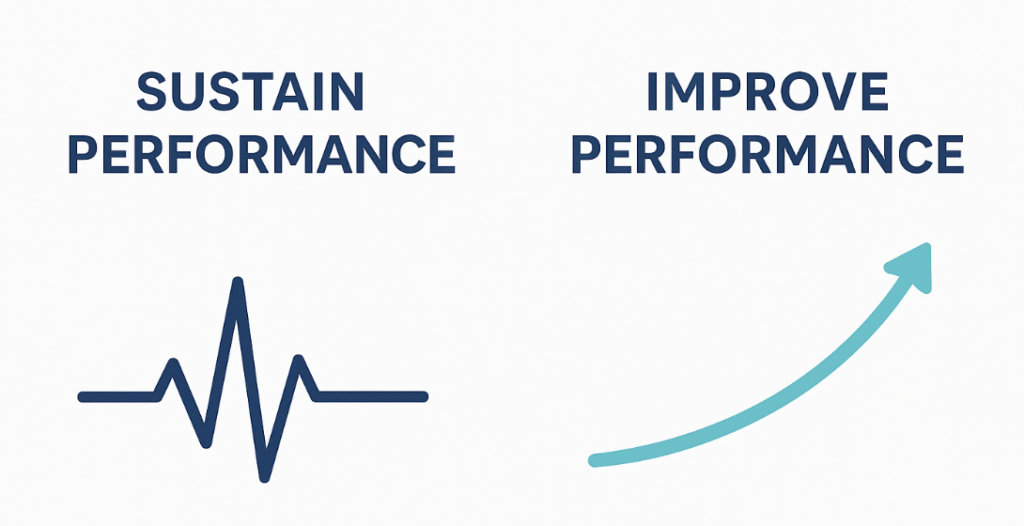
- Business as usual — the processes and results we want to sustain at their current (acceptable) level.
- Strategic improvement — the goals and results we want to elevate to a new level of performance.
Both are vital.
Yet many organizations treat them the same way — tracking everything together in one overloaded dashboard, blurring what needs attention and what doesn’t.
The result is lost focus and confusion over what truly matters.
Let’s unpack how to separate — and balance — these two types of measures.
1. It Starts with the Goal
Every meaningful measure begins with a goal.
A goal defines whether we want to maintain performance or improve it.
- If what we want is to “keep customer satisfaction steady above 90%”, that’s a sustainability level we want to preserve. There is no intention for improvement, but a need to keep an eye on to ensure it doesn’t drop.
- If the goal is “increase customer satisfaction from 85% to 90% by next year”, that’s an improvement goal.
It seems subtle, but this distinction changes how we manage, review, and act on measures.
Without this clarity, organizations fall into the trap of trying to “improve everything” — spreading resources thin, creating dashboard overload, and losing strategic focus.That clarity drives how we select, track, and discuss measures.
2. Tracking Measures for the Right Intent
The measure design process is no different for any type of goal we want to achieve.
If we are tracking a measure to see the changes through time, we need XmR charts. Because there is no other tool that will give you the information of what is the true performance of our measures are.
Only the purpose of tracking is different for improvement and business as usual (or backburner) measures.
For example:
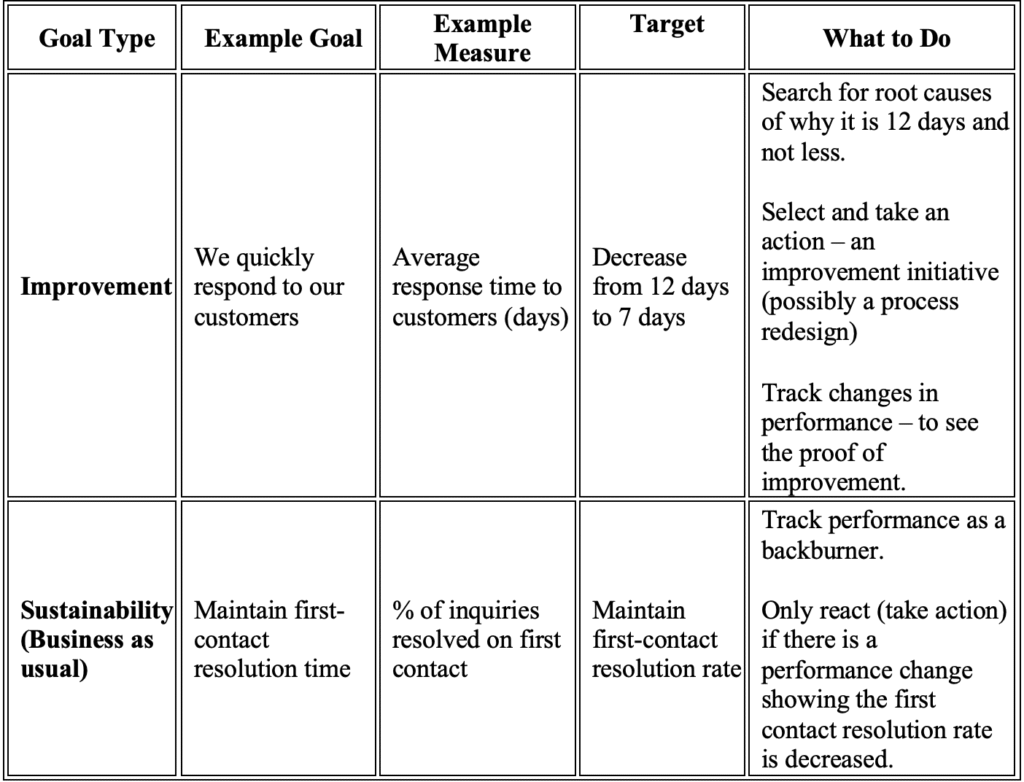
Both are important — but their management attention is not the same.
3. Separate the Focus: Different Spaces for Different Conversations
One of the biggest mistakes organizations make is mixing sustainability and improvement measures in the same reports and meetings.
When everything is in one place:
- The “business as usual” data crowds out the strategic improvement data.
- Managers get caught firefighting stable processes instead of leading real change.
- Improvement goals lose visibility and momentum.
To avoid this, it’s helpful to separate reporting and review spaces:
- Operational dashboards track sustainability goals — things that must stay healthy and predictable.
- Strategic performance reviews focus on improvement goals — the few areas that require deliberate, resourced change.
- Or keep the topics separate in a meeting and in reports. Highlight what is on priority focus and what is not.
This separation keeps focus sharp and avoids confusing “watching” with “improving.”
4. When “Business as Usual” Needs Attention
A sustain goal doesn’t mean “ignore it.”
It means “keep an eye on it — but don’t invest improvement effort unless there’s a signal.”
If a sustainability measure shows an unwanted change — for instance, defect rates suddenly rise, or customer satisfaction drops— that’s when the “business as usual” area temporarily moves into improvement focus.
In other words:
“If performance goes off track, it becomes an improvement goal — until stability is restored.”
This flexible approach keeps the organization both stable and adaptive.
5. The Strategic Value of Separation
Distinguishing between sustainability and improvement measures isn’t about adding complexity — it’s about clarifying intent.
It ensures:
- Improvement efforts target the right priorities.
- Resources are not wasted on already stable areas.
- Operational teams know what to monitor.
- Leaders can focus reviews on the few goals that truly drive change.
In short, it builds discipline into strategy execution.
The Takeaway
Not every measure should be improved.
Some should simply be sustained — and that’s perfectly healthy.
The art of performance management lies in knowing which is which, and treating them differently.
Together, they form a balanced system — stable where it should be, and improving where it must.
Which of your current KPIs belong to “business as usual” — and which truly represent your organization’s focus for improvement?
Recent Comments